The art of deliberate discomfort
Why true craft requires seeking out the grind, not avoiding it.
↳ Builds on Robert A. Bjork and Elizabeth L. Bjork — Desirable Difficulties in Learning.
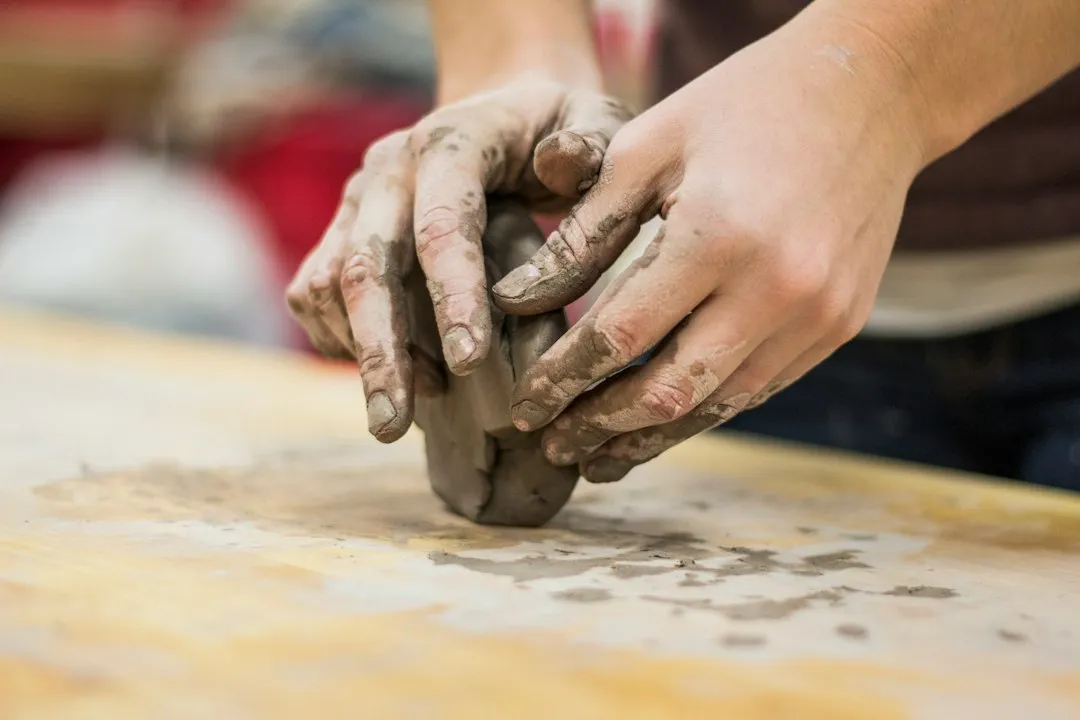
“Smooth seas do not make skillful sailors.” — African Proverb
The Question
We live in an age that celebrates ease. Every app, every service, every life hack promises to smooth the path, remove friction, and deliver results with minimal effort. The allure is undeniable: who wouldn’t want to achieve mastery without the accompanying struggle? Yet, when we look at true artisans, masters of any craft, their stories are rarely about finding shortcuts. Instead, they are filled with accounts of deliberate, often uncomfortable, practice. This raises a tension: is the patient pursuit of better work about optimizing away every speck of difficulty, or is there a crucial role for intentionally seeking out and enduring discomfort?
On one hand, efficiency is a virtue. Streamlining processes, automating the mundane, and learning optimal techniques all contribute to faster progress and less wasted energy. Why bang your head against a wall when a door is available? Why suffer through clumsy repetitions if a better method exists? The modern mindset suggests that smart work minimizes hardship, allowing us to reserve our precious mental and physical resources for truly novel challenges. To deliberately court discomfort seems almost masochistic, a rejection of progress itself.
But then we observe the sculptor tirelessly refining a detail, the writer rewriting a single paragraph twenty times, the musician practicing a difficult passage until their fingers ache. These aren’t people avoiding challenge; they are actively engaging with it, often choosing the harder path precisely because it promises a deeper level of mastery. Is there a point where the pursuit of ease becomes counterproductive to craft, where true growth demands a willing embrace of the very resistance we are so often taught to avoid?
The Argument
True craft, the kind that endures and inspires, is often forged in the fires of deliberate discomfort. It’s not about being inefficient or seeking pain for its own sake, but understanding that certain kinds of resistance are essential for developing nuanced skill and deeper understanding. The central claim is this: the patient pursuit of better work requires us to actively seek out, rather than merely tolerate, the specific kinds of difficulty that force growth.
Consider the concept of “desirable difficulties,” coined by cognitive psychologists Robert and Elizabeth Bjork. Their research shows that learning strategies that introduce a degree of challenge—like spaced repetition, interleaving different subjects, or testing yourself rather than rereading—often feel harder and slower in the moment, but lead to far more robust and lasting retention. This is counterintuitive: our subjective experience of ease often misleads us into thinking we are learning effectively. The discomfort of retrieval practice, for instance, strengthens the neural pathways more effectively than passive review. When you’re struggling to recall a fact, your brain is actively working, building connections that make future recall easier and more reliable. This isn’t just about memory; it applies to any complex skill where the “smooth” path of rote repetition might build speed but not true adaptability or depth.
Another strand of evidence comes from the world of physical training. Athletes don’t just lift light weights repeatedly; they progressively overload their muscles, pushing past comfortable limits to stimulate growth. This principle, known as progressive resistance, is foundational to building strength and endurance. The muscle fibers don’t adapt and strengthen until they are put under stress beyond their current capacity. Similarly, in creative and intellectual pursuits, the deliberate act of tackling problems just beyond our current skill level—what Mihaly Csikszentmihalyi calls the “challenge-skill balance” for entering a state of flow—is where true development occurs. If the task is too easy, we get bored; if it’s too hard, we get anxious. The sweet spot, which often involves a degree of productive struggle, is where our abilities are stretched and refined.
Finally, the very act of overcoming specific, chosen difficulties builds resilience and character. When a craftsman patiently works through a complex join that requires absolute precision, or a writer grapples with articulating a nuanced idea, they aren’t just improving their technical skill. They are also developing a deeper tolerance for frustration, a heightened capacity for persistence, and a more profound understanding of the material itself. This isn’t the vague, self-helpy notion of “grit”; it’s the specific, earned confidence that comes from knowing you can handle hard things, because you have deliberately chosen to handle them many times before.
The Counterpoint
A thoughtful skeptic might argue that this emphasis on “deliberate discomfort” romanticizes struggle and risks promoting an inefficient,甚至 harmful, approach to craft. They might point out that much of modern progress, particularly in fields like software development, design, and manufacturing, has been about removing friction, not adding it. Why should a craftsman painstakingly hand-plane wood when a machine can do it faster and more uniformly? Why should a writer struggle with archaic tools when word processors streamline the process? The goal, they would contend, should be to achieve the desired outcome with the least amount of wasted effort, to find the most elegant and efficient path. Deliberately making things harder, they might say, is a form of performative suffering, confusing effort with effectiveness. True mastery, they’d argue, is about making the difficult look easy, not about making the easy look difficult.
This objection holds significant weight. Indeed, mindless struggle is counterproductive. There’s a critical difference between productive discomfort and simply spinning your wheels. We shouldn’t seek out pain when a genuinely better, less taxing method exists. The point is not to reject all efficiency, but to discern between unnecessary friction (which should be removed) and essential friction (which builds character and skill). What survives the objection, then, is the idea that the right kind of discomfort, applied strategically and with intention, is a catalyst for specific types of growth that cannot be achieved through ease alone. We concede that not all struggle is good, but we maintain that some struggle is indispensable. The challenge is in distinguishing between the two.
What To Do With It
This week, identify one area in your craft or work where you habitually choose the path of least resistance. It could be using a familiar tool when a more challenging one might offer greater precision, or sticking to a comfortable genre in your writing, or always opting for the quickest solution to a problem. Instead, intentionally introduce a small, deliberate discomfort. Choose the slightly harder path. Commit to a technique that demands more of you, even if it slows you down initially. Force yourself to work within a constraint that stretches your current abilities. This isn’t about grand gestures; it’s about micro-challenges that nudge you out of complacency. For instance, if you always draft digitally, try outlining a complex idea with pen and paper. If you always use a template, try building something from scratch. Observe the subtle shifts in your thinking and the quality of your output. What specific skill or insight emerges only when you choose the harder way?
Sources
Worth your minute?
Get tomorrow’s issue and never miss a flame. Free, weekday mornings.
No spam. One email each weekday. Unsubscribe anytime.
Down the rabbit hole
The Craft of the Deliberate Error
Why purposefully making mistakes can accelerate true mastery.

The craft of re-reading
Why true mastery isn't just about consuming new ideas, but revisiting old ones with fresh eyes.
The humility of craft
Why true mastery begins not with confidence, but with the quiet admission of how much you don't yet know.