The patient pursuit of mastery
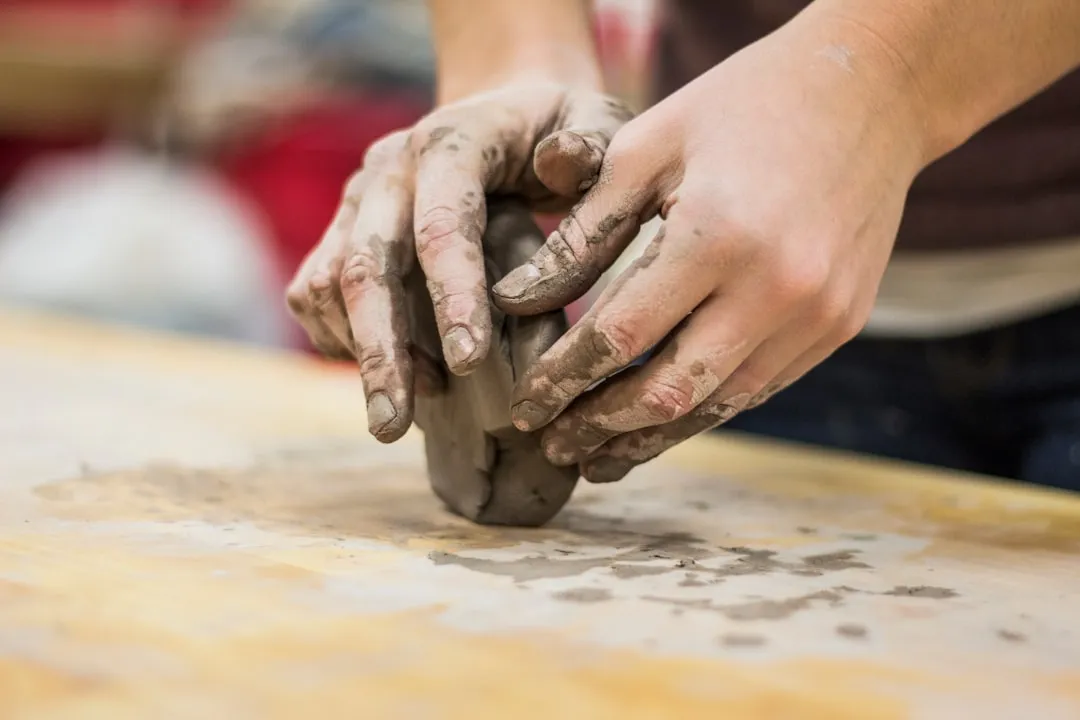
Why the true craftsman isn't focused on results, but on the careful repetition of process.
↳ Builds on Mihaly Csikszentmihalyi – Flow: The Psychology of Optimal Experience.
“Before I got in, I was never a good shooter. I never had a good touch. All I did was work on my form, form, form. I never thought about results.” — Stephen Curry
The Question
We live in a world obsessed with outcomes. From productivity apps promising to “optimize your results” to self-help gurus pushing “five steps to success,” the narrative is consistently skewed towards the finish line. We measure ourselves by promotions, followers, profits, and personal bests. This focus isn’t inherently bad; goals provide direction and motivation. However, a singular, relentless pursuit of the result can inadvertently short-circuit the very process that leads to genuine mastery. When the outcome becomes the only metric, we risk sacrificing the patient, iterative work that distinguishes craft from mere output. Is it possible, then, that our modern fixation on results actually hinders our ability to achieve them in a meaningful, sustainable way? Or is the results-driven mindset simply a necessary evil in a competitive world, and any deviation a naive indulgence?
The Argument
The true craftsman, paradoxically, often achieves superior results precisely because their primary focus isn’t on the outcome itself, but on the meticulous refinement of their process. Consider the relentless practice of a concert pianist who spends hours on a single phrase, not to immediately perform it flawlessly, but to embed the muscle memory, tonal nuance, and emotional resonance. The immediate result of that hour isn’t a perfect performance; it’s a barely perceptible improvement in technique. Yet, it’s these aggregated, almost invisible improvements that ultimately culminate in a masterful rendition.
This principle is evident in any domain requiring deep skill. Stephen Curry, widely regarded as one of the greatest shooters in basketball history, famously recounts how his early training prioritized form above all else. He didn’t focus on making the shot, but on the precise mechanics of his release, his footwork, his follow-through. The consistent, disciplined repetition of these foundational elements, without immediate concern for the ball going through the hoop, built an unshakeable base. The results—championships and scoring records—were a downstream consequence of an unwavering commitment to the integrity of the process.
This emphasis aligns with what psychologist Mihaly Csikszentmihalyi described as “flow state,” where individuals become completely absorbed in an activity, losing track of time and self. Such states are rarely achieved when one is constantly evaluating performance against a future outcome. Instead, they emerge from a deep engagement with the immediate task, the how rather than the what. By immersing oneself in the craft, the individual transcends the anxiety of performance, allowing their skills to operate at their peak. The results then follow, not as an effortful push, but as a natural unfolding of a well-executed process.
The Counterpoint
A thoughtful skeptic might argue that divorcing oneself from results is a luxury, not a viable strategy in the real world. Businesses need profits, athletes need wins, and artists need sales to survive. “Process for process’s sake” can quickly devolve into naval-gazing or an excuse for mediocrity if there’s no external pressure or clear objective. How can you refine your shooting form if you don’t know if the ball is even going in? Feedback from results, even negative ones, is crucial data. Without a tangible outcome to measure against, how do we differentiate between productive practice and mere busywork? A strict focus on process, without an eye on the scoreboard, risks becoming an inefficient and potentially self-indulgent endeavor.
This objection holds significant weight. Results do matter, and ignoring them entirely would be foolish. However, the point is not to disregard results, but to reframe their role. What survives the objection is the understanding that results are often lagging indicators, reflections of past processes. The crucial insight is that while you cannot directly control the outcome, you can directly control the process. The concession is that occasional, deliberate evaluation of results is essential for course correction, but it must inform the refinement of the process, not overshadow the process itself. The craftsman uses results as a mirror to improve their tools and technique, not as a whip to drive themselves faster.
What To Do With It
This week, identify one area in your work or personal life where you’re overly focused on a specific outcome (e.g., getting a promotion, finishing a project, achieving a fitness goal). Instead of fixating on that end goal, consciously shift your attention to the smallest, most controllable elements of the process that contribute to it. If it’s a project, focus on the quality of a single paragraph or the clarity of one meeting agenda. If it’s fitness, dedicate yourself to the precision of a single repetition or the consistency of a warm-up. For one hour, immerse yourself entirely in the doing, allowing the outcome to recede into the background. Observe how this shift in focus changes your experience of the task and, crucially, the quality of your effort.
What one small part of your process could you commit to, fully and patiently, this week?
Sources
Worth your minute?
Get tomorrow’s issue and never miss a flame. Free, weekday mornings.
No spam. One email each weekday. Unsubscribe anytime.
Down the rabbit hole
The patient pursuit of better work
Why true craft isn't about perfection, but about the relentless, quiet commitment to improvement.
The Craft of the Deliberate Error
Why purposefully making mistakes can accelerate true mastery.

The craft of re-reading
Why true mastery isn't just about consuming new ideas, but revisiting old ones with fresh eyes.