The identity you inherit
Before you can build who you want to be, you have to see who you were handed.
↳ Builds on James Clear — Atomic Habits.
“Character is destiny.” — Heraclitus
The Question
There is a genre of self-improvement writing that presents the self as a project. You decide who you want to be, you build the habits that would belong to that person, and over time you become them. It is a compelling frame. James Clear’s identity-based habits model is one of its best versions — the idea that lasting behavior change happens when you start to see yourself differently, not just when you set better targets.
But there is an assumption buried in all of it that rarely gets examined: that you are starting from a reasonably neutral position. That the “current self” you are trying to change is just an incomplete draft, not a fully formed structure with its own architecture, history, and resistance to renovation.
For most people, that assumption is wrong. Before you can build who you want to be, you have to reckon seriously with who you were handed.
The Argument
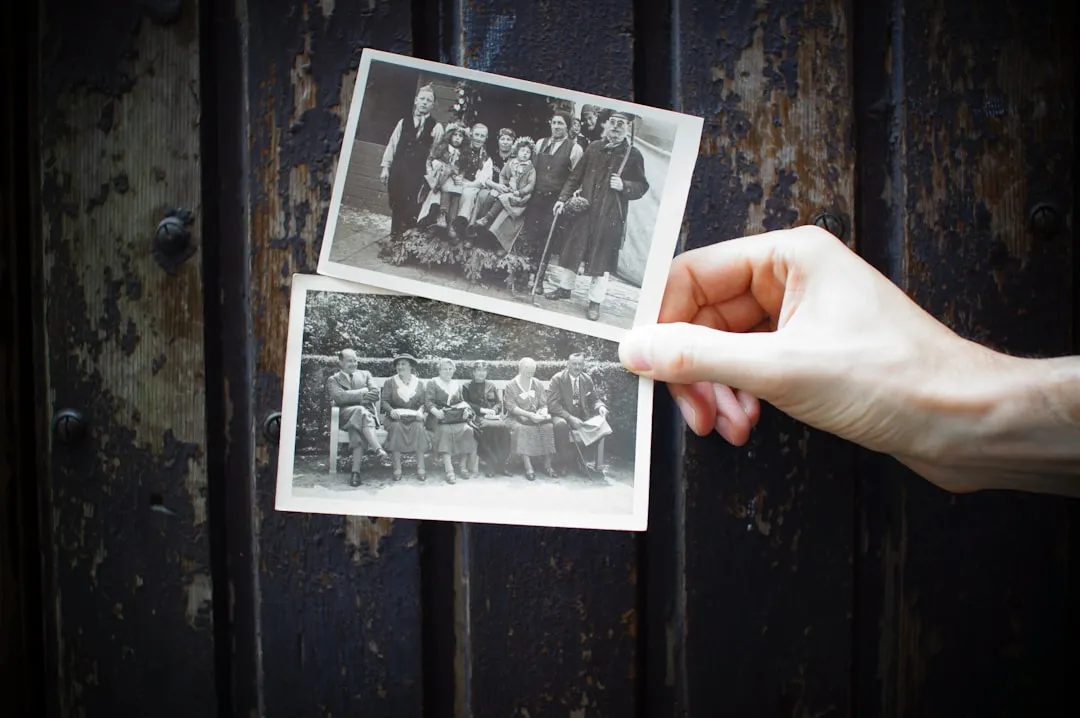
Identity is not primarily chosen. For the first two decades of your life — the period when neural grooves are deepest, when patterns are established, when the self’s basic shape is formed — you are mostly a recipient. You receive the emotional vocabulary of the household you grew up in. You receive the stories told about you: “She’s the responsible one.” “He was always difficult.” “You’re just like your father.” You receive the implicit rules about what kind of person succeeds, what ambition looks like, whether asking for help is strength or weakness. You receive the anxieties of your parents, transmitted not through lecture but through atmosphere.
None of this is destiny in a fixed sense. But it is not nothing, either. George Vaillant’s decades-long research on adult development, compiled in his landmark study of Harvard men across their lifespans, found that early relational experiences — particularly the emotional quality of childhood — had traceable effects on adaptation, health, and capacity for intimacy well into old age. The inherited self has weight. It shapes what feels possible, what feels dangerous, what feels like home.
This is where Clear’s identity-based model runs into its real-world limit. The model says: decide who you want to be, then cast votes for that person with each small action. It is useful and largely true. But it treats the process as if it begins in clean air. In practice, you are not casting votes for a new identity from a neutral position. You are casting votes while the inherited identity is also voting — often louder, often with decades of practice, often in a language you didn’t know you were speaking.
This is why so much behavior change stalls precisely where it gets interesting. Not because the person is lazy or undisciplined, but because the new behavior — getting up early, setting boundaries, believing their work is worth sharing, asking for more money — conflicts with an older self-concept that has been in place far longer than any habit tracker. The new identity and the inherited one are not fighting. They are just incompatible shapes trying to occupy the same space.
The inherited identity isn’t malicious. It was built for a specific environment, under specific pressures, by a person who was doing the best they could with what they had. The problem is that it doesn’t automatically update when the environment changes. It keeps doing what it learned to do.
The Counterpoint
But there is a danger on the other side of this argument that is worth naming honestly.
Too much examination can become a reason not to act. The vocabulary of inherited identity and its effect on behavior is the vocabulary of therapy, and the therapy industry has produced a particular kind of person: someone who understands their childhood in remarkable detail and has not changed anything in five years. Insight without action is not healing. It is a more sophisticated form of staying in place.
There is also a version of this thinking that becomes deterministic in a way that is both factually wrong and practically useless. Yes, the inherited identity has weight. No, it is not a sentence. People change. The longitudinal data Vaillant collected showed not just the persistence of early patterns but also the remarkable capacity for what he called “mature defenses” — ways of coping that people developed in adulthood, often late in adulthood, that partially rewrote earlier trajectories. The self is not static. It is just not as plastic as the more optimistic self-improvement literature implies.
The right frame is probably this: the inherited identity is a real constraint, but it is not the final one. And you cannot work around a constraint you haven’t acknowledged exists.
What To Do With It
Think of one habit you’ve tried to build — or break — repeatedly, across months or years, and have consistently failed at. Not a habit you tried once. A recurring attempt, with recurring failure at roughly the same point.
Now ask a different question than you usually ask. Not “why don’t I have more discipline?” Not “what system could I build?” Instead: what would have to be true about how I see myself for this to keep failing?
The answer is rarely flattering, and it is rarely about laziness. It is usually something more like: “I grew up believing that people like me don’t get to have that.” Or: “If I succeed at this, I become someone my family doesn’t recognize.” Or: “I’m afraid that if I try seriously, I might still fail, and then I have to live with that.” The old identity is protecting something. It always is.
You don’t have to resolve it before you start. That is the key concession the counterpoint forces. You don’t need to fully excavate the inherited self before you begin building the deliberate one. The building itself is part of the excavation. But you do need to name what you find.
The naming matters more than people expect. Not because it solves anything immediately, but because it changes the texture of the struggle. Instead of failing to write because you’re lazy, you’re failing to write because some part of you has never believed that what you have to say is worth anyone’s time. That’s a different problem. It points to different work.
Most behavior change treats the surface. Identity work goes one layer deeper: not just what you do, but what story about yourself makes that behavior feel impossible. You were handed that story. You didn’t write it. Which means, with patience and enough repetition, you can write a different one.
Not from scratch. Not all at once. But you can start.
Sources
Worth your minute?
Get tomorrow’s issue and never miss a flame. Free, weekday mornings.
No spam. One email each weekday. Unsubscribe anytime.